
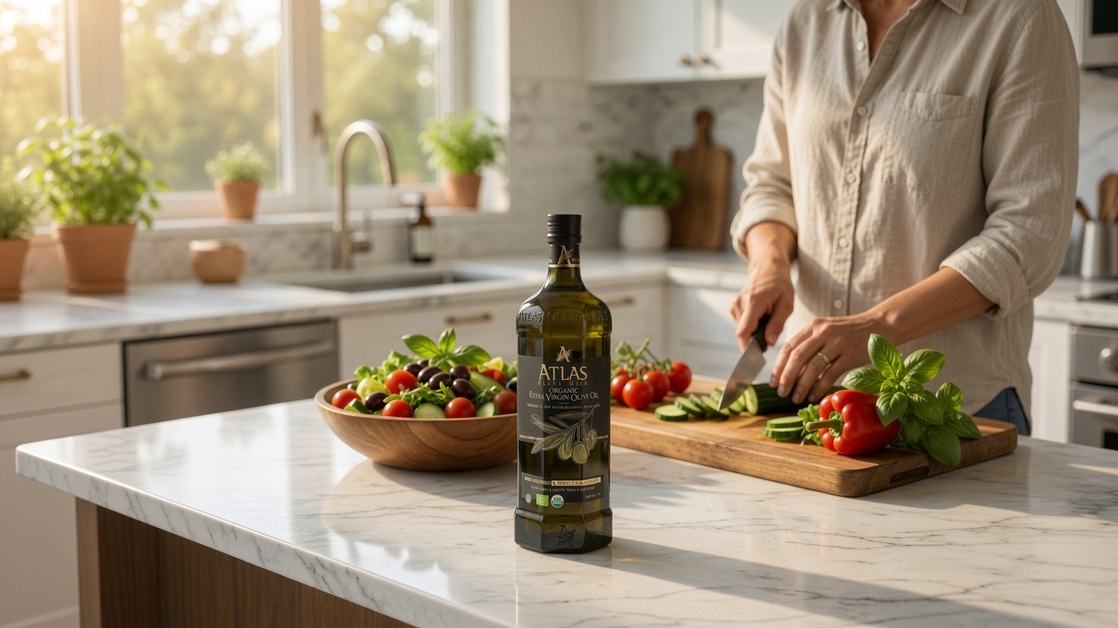
We are on our third bottle of this wonderful olive oil. At first I bought it as a straight spoonful addition to our morning routine. It has a bit of a kick. Then I just opted to putting it with apple cider vinegar as part of my salad dressing. Eat more salad, have some apple cider vinegar and polyphenol rich olive oil. A win-win-win! Here’s what ‘polyphenol-rich’ really means, what human studies found, and how this olive oil earns its place in my kitchen.
The label makes a claim worth chasing down. Atlas Organic Extra Virgin Olive Oil Moroccan, 1 liter — cold-pressed and polyphenol-rich.[1] The first is a pressing method. The second is a marketing phrase that happens to have a real body of human research behind it, and that research starts with what happens to fats in the blood.
Why polyphenols matter
Polyphenols are plant compounds, and they show up in a lot of foods. What makes them interesting in olive oil is that they're the part of the bottle that isn't just fat. Virgin olive oils carry more phenolic compounds than refined ones, which gave researchers an obvious question to test: do those extra compounds do anything measurable?[2]
The plain-language version of what they measured: LDL particles ferry cholesterol and other fats around your bloodstream. Those particles can take chemical damage — that's oxidation — and researchers track it by measuring oxidized LDL. In human trials, olive oils higher in phenolic content have lowered that marker.[2][3]
So "polyphenol-rich" isn't only a bottle-front adjective. It points at something people have actually run experiments on.
What happened when people drank different oils
EUROLIVE is the study that put the question most directly. Two hundred healthy men across five European countries drank low-, medium-, and high-phenolic olive oils, each for a three-week stretch, at 25 mL a day. The clever part: every man drank all three. Nobody was stuck in one group, so each participant became his own comparison.[2]
The pattern tracked with the phenol content. As it rose, HDL cholesterol — the one usually labeled "good" — rose with it, and markers of oxidative damage dropped. The high-phenolic oil brought oxidized LDL down.[2] The fat was more or less the same across all three bottles. The plant compounds were the variable, and the variable moved the numbers.[2]
Two later reviews point the same direction:
- A 2018 systematic review of 26 studies found higher-polyphenol oils improved oxidized LDL and a second marker of fat damage compared with lower-polyphenol oils.[3]
- A 2023 review pooling 10 randomized trials, mostly in healthy European adults, found a significant improvement in HDL cholesterol from olive oil polyphenols.[6]
Modest effects on blood markers, measured repeatedly, in real people. That's a reasonable thing to want in a cooking oil.
The bigger picture belongs on the plate
Blood markers are one chapter. Whether anything happens to people is another, and PREDIMED is the study that went after it: 7,447 high-risk adults in Spain, ages 55 to 80, followed for a median of 4.8 years.[4]
In the revised 2018 analysis, the group assigned to a Mediterranean diet with extra-virgin olive oil had fewer major cardiovascular events — heart attack, stroke, cardiovascular death — than the group advised to cut fat.[4] Note what was tested: a whole eating pattern, with olive oil in it. Not a spoonful of oil layered onto whatever else was for dinner.
Which is the useful takeaway, and the one that ends up in my kitchen. Olive oil earns its place in meals built on vegetables, beans, and simple food. It's an ingredient and a reason to like what's on the plate.
How I actually use it
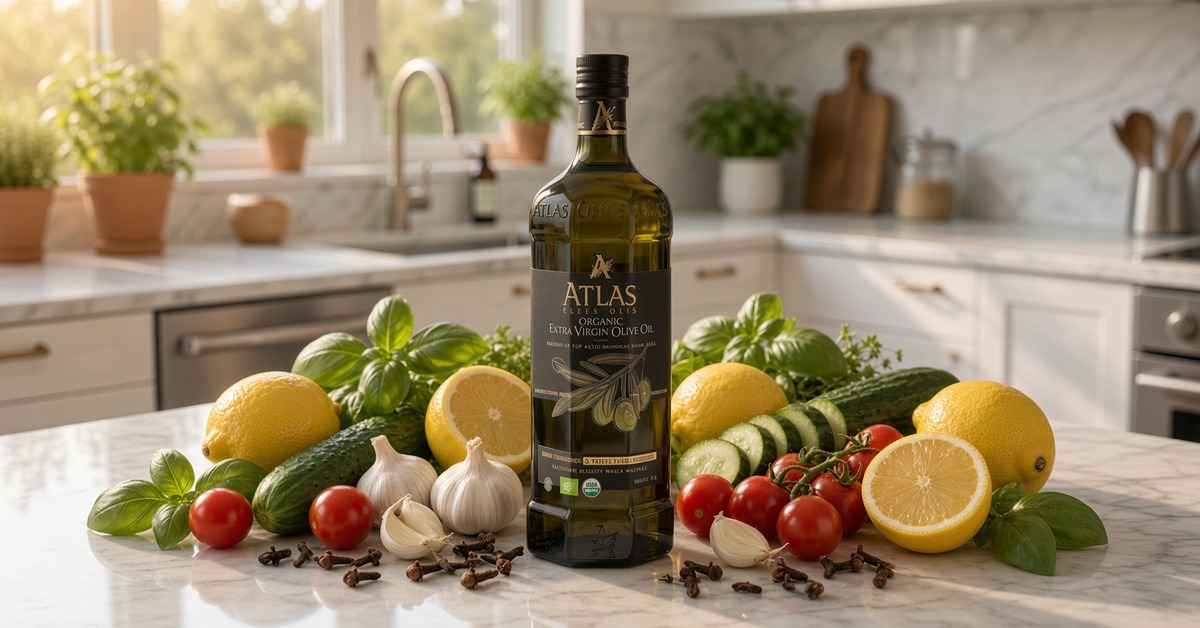
Atlas lists aromas of almonds, culinary herbs, sweet banana, lemon, and basil, and suggests it for general cooking, baking, and desserts.[1] Your palate gets the final say, but here's where I'd start:
- Taste a little on its own. Optional, and a little strange the first time, but it's the fastest way to learn what a bottle tastes like before it disappears into a dish.
- Finish things with it. A drizzle over vegetables, beans, or a salad right before serving, with lemon juice or vinegar alongside.
- Cook with it like you would any olive oil. Vegetable dishes, baking, anything that calls for it.
- Store it cool, dry, and out of the sun. Heat and light are what wear a bottle down.[5]